Strategic Guide to Exterior Lighting Color Temperature
Choosing the Right Kelvin Range for Outdoor Spaces
Lighting is memory made visible! In South Africa’s evenings, a single fixture can decide whether a courtyard feels welcoming or austere—statistically, 68% of homeowners report that outdoor lighting changes how they use their yards after sunset.
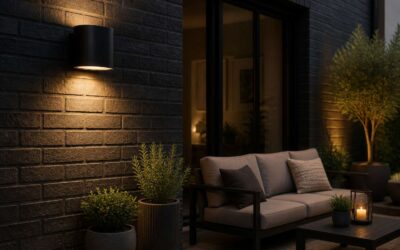
Color temperature, measured in Kelvin, is the silent conductor of that memory. When we talk about the “outdoor lighting kelvin” range, we’re choosing mood as much as visibility. Warm tones around 2700–3000K invite conversation; neutral whites 3500–4100K sharpen edges; daylight-like 5000–6500K reveals textures of stone and metal.
Consider these broad palettes across zones.
- Entrances and steps: 2700K–3000K
- Patios and seating: 3000K–4000K
- Gardens and landscape accents: 4000K–5000K
- Water features and architectural accents: 3500K–4500K
The outdoor lighting kelvin choice is a conversation with climate, architecture, and the people who inhabit the space; it shapes how we linger after sunset and how we connect to the night sky.
Kelvin Temperature and Mood in Exterior Design
South African evenings have a way of turning spaces into memory; 68% of homeowners report outdoor lighting changes how they linger after sunset, shaping a courtyard’s welcome or restraint.
Color temperature, the Kelvin compass, is the quiet conductor of mood and visibility in exterior design. outdoor lighting kelvin becomes a dialogue with architecture, climate, and human warmth, moving from hospitality to crisp edges under a single tone.
To envisage its impact, consider these mood cues:
- Warmth that invites conversation
- Neutral whites that sharpen edges
- Daylight whites that reveal textures
This palette speaks to entrances, terraces, and gardens alike—an astral map that guides the eye and the heart, all through a single parameter.
Practical Applications of Kelvin in Outdoor Lighting
South Africa’s evenings are not merely darkness; they are an invitation to memory. In Cape Town and beyond, 68% of homeowners say what glows after sunset alters how long they linger.
Color, in the form of outdoor lighting kelvin, is the quiet conductor of mood and clarity. It dances with architecture, with heat of the day lingering, shaping entrances, terraces, and gardens into stages where night becomes a partner, not a rival.
- Light quality guides the eye and reveals texture without harsh glare.
- Color temperature frames architecture and plant life, balancing drama with legibility.
- Brightness and spacing create safe pathways while preserving atmosphere after dark.
Understanding this Kelvin language gives designers a mnemonic to craft spaces that welcome, yet resist the dusk.
Technical Considerations and Implementation Tips for Exterior Lighting Kelvin
In Cape Town’s twilight, the glow writes the evening’s script. This strategic guide on exterior lighting color temperature reveals how outdoor lighting kelvin becomes a quiet arbiter of mood and clarity.
Key considerations include stable color temperature, high CRI fidelity, and controlled glow-to-glare transitions that respect both architecture and living plant textures.
To frame decisions, consider these enduring themes:
- Color stability across dimming cycles
- Beam control and spacing for safe navigation
- Thermal load and long-term reliability
In practice, these insights harmonize with site lines, materials, and climate, guiding designers toward balanced scenes where brick, foliage, and night air breathe in cadence.



0 Comments