Benefits of Outdoor Lighting in Jacksonville
Enhancing Home Security and Safety
Nearly 60 percent of burglaries occur during daylight hours, but the threat after sunset feels more intimate. In Jacksonville, a dark perimeter around a home offers concealment to anyone with harmful intent. Strategic outdoor lighting Jacksonville removes that concealment, exposing movement before a door is reached.
Light alters perception. A person considering a break in looks for shadows and blind spots. With well placed fixtures, those disappear. Motion activated lights startle and reveal. Path lighting along steps and driveways prevents trips and falls for residents and visitors alike.
- Visible light near entrances reduces the chance of forced entry.
- Illuminated walkways lower the risk of accidents after dark.
The psychological effect is real. A lit home conveys vigilance, and that feeling seeps inward, allowing a deeper sense of rest. Choosing outdoor lighting Jacksonville means you accept responsibility for the space you occupy, for your family, and for anyone who crosses it.
Improving Curb Appeal and Property Value
Curb appeal works before a word is spoken. In Jacksonville, the right outdoor lighting jacksonville makes a house look settled, cared for, and worth its price. Buyers and neighbors notice the glow long before they notice the roof or the paint.
Property value rises when light reveals a home’s strengths. A porch lamp frames the front door. A low light along the walkway guides visitors safely while adding texture. These small touches cost little, but they change how a property is perceived.
Focus on these areas:
- Front entry and porch
- Walkway and driveway borders
- Garden beds and architectural accents
Trust me, this is one of the simplest upgrades! The return shows up in the offer price, and often in the time a house stays on the market.
Extending Outdoor Living Space into the Evening
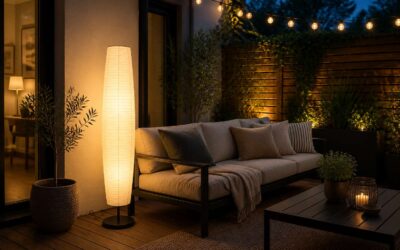
The sun dips early in Jacksonville for half the year. Warm air lingers, but darkness often pushes people indoors before they are ready. Outdoor lighting jacksonville extends the day on your own terms. A few well placed fixtures turn a patio into a second living room.
Think about the evening routines you already enjoy:
- A dim path light for reaching the gate.
- A spotlight over the braai if you cook outdoors.
- A lantern near the seating area for conversation.
Each light answers a practical need while shaping the mood. The reward is simple. You spend more hours outside, and your home feels larger because of it. That alone makes the investment worthwhile.
Climate Considerations for Outdoor Lighting in Northeast Florida
Humidity and Corrosion Resistance
Salt-laden breezes and persistent humidity are the true test of outdoor lighting jacksonville. Coastal Northeast Florida air carries chloride particles that attack metal surfaces relentlessly. Steel fixtures can show corrosion within months. This is not a cosmetic issue. It is a functional one. Rust seeps into sockets, degrades wiring, and shortens lifespan.
Material choice matters more than design. Marine-grade stainless steel, copper, and powder-coated aluminum hold up in this damp environment. Your outdoor lighting jacksonville investment needs metal integrity before style. Humidity also attacks seals and gaskets. Rubber hardens and cracks. Glass traps condensation. A proper seal stops both! We check the Ingress Protection rating when selecting fixtures for this region.
- Fixtures with an IP65 rating or higher
- Gaskets made from EPDM or silicone
- Wiring paired with moisture-blocking connectors
Those specifications keep water out and current flowing. The reward is a system that survives salty storms and keeps shining. That is dependable lighting for this coast.
Salt Air Exposure from Coastal Winds
Coastal winds are the delivery system for salt. Each gust carries microscopic chloride particles that settle into fixtures, connectors, and mounting hardware. For outdoor lighting jacksonville, this means wind direction matters as much as fixture quality. A light mounted on the east side of a home faces the full brunt of ocean breezes, while a sheltered western placement may last years longer. That is a difference you can measure in service life!
Wind also imposes physical stress. Large fixtures and tall poles must withstand gusts that can exceed 40 mph during storms. Proper orientation reduces both salt accumulation and wind load. Consider these factors when planning a coastal lighting layout:
- Position fixtures on leeward sides of structures when possible
- Choose aerodynamic housings that shed wind rather than catch it
- Verify mounting hardware is rated for local wind speeds
Salt air exposure is constant, but smart placement and robust construction keep outdoor lighting jacksonville operating reliably through every season.
Lightning and Surge Protection for Coastal Storms
Northeast Florida records over 70 thunderstorm days per year, a figure that turns lightning surge protection into a primary design criterion. The coastal storm brings more than rain; it delivers a transient voltage spike capable of destroying transformers and LED drivers in a single microsecond.
A well-planned outdoor lighting jacksonville installation must integrate surge suppressors at multiple points. Whole home protectors at the panel are a start, but they leave the low voltage side exposed. Dedicated type 3 suppressors placed near the fixture transformer offer a second line of defense against the inductive coupling that occurs when lightning strikes the ground nearby.
- Ground metal housings to a dedicated earthing rod
- Install surge arrestors on every branch circuit
- Check that the control wire has its own protection path
That grounding path is often the weak point. For outdoor lighting jacksonville, the difference between a layout that survives a decade and one that fails after a single summer storm comes down to how well those surge paths are bonded. A silent failure mode exists here: the system works normally until the next big front passes, then everything goes dark.
Seasonal Adjustments for Daylight and Weather Changes
Northeast Florida’s daylight veers from fourteen hours in summer to ten in winter, a span that breaks fixed timers! The same outdoor lighting jacksonville that works in July will falter by December unless its controller tracks the changing sunset. Summer storms also darken the sky in minutes, while winter’s low sun casts long, shifting shadows across the lawn.
A modern photocell with a delay can handle this. But a layered design needs more:
- Program a summer schedule with shorter dusk-to-dawn operation
- Switch to a warmer color temperature during winter foliage
- Raise fixture angles to combat winter glare
These seasonal adjustments prevent the system from becoming obsolete between solstices. They also reduce maintenance after weather events, so your installation remains steady through both the wet heat and the dry chill.
Types of Outdoor Lighting Fixtures and Technologies
LED vs Halogen: Efficiency and Longevity
Halogen bulbs waste most of their energy as heat, a simple fact that matters when planning outdoor lighting jacksonville. That heat shortens the life of the fixtures, encourages insect activity, and pushes your energy bill upward. LED fixtures run cool and deliver the same brightness with a fraction of the wattage.
The longevity difference is stark. A halogen lamp lasts near 2,000 hours. A quality LED chip in modern fixtures runs past 25,000 hours. Fixtures designed for LED also allow for tighter, more directed beams of light, useful for accenting architecture or grazing a textured wall. Common fixture types that pair well include:
- Well lights for pathway grazing
- Wall washes for exterior brick
- Pendant lights over an outdoor kitchen
That directed quality of LED also reduces light pollution during humid evenings, a benefit for many homes in the region.
Path Lights and Driveway Illumination
A driveway is not a runway. It is the threshold between the public and the private self. Thoughtful path lights extend a welcome, but they also set boundaries. They map the way for guests, yet they also signal to onlookers that the space is inhabited and aware. The psychology of illumination is about orientation.
For outdoor lighting jacksonville, the difference between a flood and a guided beam is significant. A flood obliterates shadow but flattens texture. A bollard or a low-level path light creates a route, allowing the eye to rest on the ground ahead, not in the harsh glare of a security scan! I find that outdoor lighting jacksonville driveway illumination should offer a sequence of light and shadow to the arriving vehicle.
Fixture choices for driveways include:
- Recessed ground lights for narrow asphalt lanes.
- Bollard lights to delineate curves and edges.
- Downlights mounted on posts for broader coverage.
Floodlights for Security and Accent
A floodlight that blinds the eye is a security risk, not a solution. This is why outdoor lighting jacksonville requires careful fixture selection. A 120 degree beam that washes an entire wall creates glare, not safety. Properly aimed floodlights use motion sensors and photocells to light specific zones. For accent, narrow beam spread spotlights can highlight a tree or architectural detail without bleaching the night. Consider these options:
- Shielded floodlights with adjustable heads
- Dark sky compliant fixtures
- Integrated LED floodlights with color temperature control
The technology has moved beyond simple on and off. For outdoor lighting jacksonville, dimming controls let you lower output after midnight. I have seen too many properties where a single floodlight turns the facade into a white wall. And pairing floodlights with timers reduces energy waste. The goal is to see the intruder and the garden, not to simulate noon.
Spotlights for Highlighting Landscape Features
A 10 degree beam spread can light one tree trunk without touching the fence beside it. A 60 degree beam lights the fence, the tree, half the driveway, and your neighbor’s mailbox. For outdoor lighting jacksonville, that difference matters.
Spotlights with narrow optics create controlled highlights for specimen plants and architectural details. Uplighting from the base changes how tall a palm feels. Downlighting from a branch gives that cool moonlit look without the glare. The trick is aiming, not wattage.
Choose targets with strong character:
- Signature trees with interesting bark or branching
- Stone walls with texture that catches grazing light
- Water features that need sparkle, not full wash
Keep the source hidden behind foliage or a lower branch. A good spot for outdoor lighting jacksonville is precise light placement, not a wattage contest.
Deck and Step Lighting for Safety and Ambiance
The average South African stairway is a dark hazard after sunset. Deck and step lighting fixtures fix that without blinding anyone. Recessed step lights, buried into the riser, cast a low, wide glow. They define each tread.
Tape lighting under a handrail offers a continuous line, but needs proper IP ratings for local humidity. Bollard lights near a deck’s edge provide vertical cut-off. For outdoor lighting jacksonville, the goal is to see the edge, not the bulb. Choose fixtures with dimmable drivers to shift from safety beacon to after-dinner ambiance. Consider these options:
- Recessed riser lights for low glare
- Surface mount step lights for retrofits
- In-grade deck lights for wide paths
The right fixture prevents a fall and a bad mood.
Design and Installation Best Practices for Jacksonville Homes
Landscape Lighting Design Principles
Properly designed outdoor lighting jacksonville starts with a thorough site survey. Walk the property at night to identify dark zones and highlight worthy features. Focus on layered illumination: ambient, task, and accent. This approach prevents flat, harsh scenes.
For installation, follow these guidelines:
- Use low voltage transformers rated for coastal humidity.
- Bury cables at least 15 centimeters deep to avoid lawn damage.
- Position fixtures to minimize upward light pollution.
- Test the system before backfilling trenches.
Always balance brightness with contrast. A thoughtfully arranged system uses layers to create depth without glare. Remember, the goal is to reveal the home’s character, not to overpower it.
Placement Strategies for Trees, Walkways, and Water Features
Placement decides whether your yard feels like a curated scene or a random collection of bulbs. Outdoor lighting jacksonville demands you consider each element individually. Graze trees with light at a low angle from below to reveal bark texture, which hides imperfections, not flatness. For walkways, place fixtures in a staggered zigzag along both edges. A straight line creates a harsh corridor;a zigzag softens progression. Water features need light aimed across the surface, never straight down or behind. Reflection doubles the effect. I have seen too many projects where one careless angle ruins everything.
When testing placements, follow this order:
- Position all fixtures but leave them unburied.
- Turn on the system and walk every path.
- Adjust angles to reduce glare.
- Lock placements and bury cables.
This process reveals issues early, saving you hours of rework! Your clients will notice a difference ordinary installers miss.
Transformer Sizing and Low-Voltage Wiring
Transformer sizing is the unglamorous backbone of outdoor lighting jacksonville. Get it wrong, and your system becomes a disco that dies at midnight. Compute total wattage by multiplying each fixture’s lamp wattage, then add a 20% buffer for voltage drop and future tweaks. That buffer is non-negotiable, because coastal humidity already sabotages enough equipment without you undersizing.
Low voltage wiring demands attention to gauge. Thicker wire carries current farther without sagging. For runs exceeding 20 metres, step up a gauge size to avoid dim, pathetic glows. Use this process:
1. Measure the distance from transformer to farthest fixture.
2. Calculate voltage drop (aim under 10%).
3. Choose paired wire gauge accordingly.
4. Daisy-chain fixtures, never star-wiring from one point.
A qualified electrician understands this logic. Your landscape will thank you, and so will your electricity bill. Outdoor lighting jacksonville rewards those who respect the basics.
Professional Installation vs DIY: Pros and Cons
The most effective installations begin with a photometric plan. Beam angles, mounting heights, and fixture housings determine how light falls across a facade. Skimping on placement creates scalloped shadows that emphasize every crack in the stucco.
Professional installation brings a thermal imaging camera and a multimeter to fine tune each circuit. DIY efforts often overlook the thermal expansion of coastal wood frames, which loosens brackets within a season. A 12 volt system requires precise splicing; self taught enthusiasts frequently misjudge the IP rating needed for direct burial.
- Orient fixtures to graze walls, not blast them
- Use overlapping beams to eliminate dark pools
- Anchor transformer boxes away from sprinkler zones
Hiring a low voltage specialist costs more upfront, but the longevity of stainless steel fittings and watertight connections outweighs the hasty savings of a weekend project. Outdoor lighting jacksonville demands that level of rigor.
Local Electrical Codes and Permits in Jacksonville
Jacksonville’s enforcement of the National Electrical Code trips up many homeowners. Low voltage systems demand permits when wires cross property lines or bury below grade. Many outdoor lighting jacksonville projects fail inspection due to shallow trenches and unsealed splices. Inspectors check trench depth, splice points, and transformer placement. Skipping the permit risks fines and rework.
Proper installation starts with a voltage drop calculation. The distance from transformer to the last fixture determines conductor size. Use 10 gauge wire for runs beyond fifty feet. Group fixtures into zones with similar distances to reduce load.
- Bury cable at least six inches deep
- Use schedule 40 conduit where wire surfaces
- Mount transformers one foot above grade
- Install GFCI protection on the feed circuit
For outdoor lighting jacksonville, coastal humidity finds any gap in underground connections. I always recommend sealing every splice with silicone filled connectors. The permit process verifies those details. A final inspection confirms the work meets local amendments for flood zones.
Smart Outdoor Lighting Controls for Modern Homes
Smart controls turn a static arrangement of lights into something responsive. For outdoor lighting jacksonville, the design phase determines the outcome. Fixtures placed without regard to sightlines or surface reflectance will disappoint, no matter how intelligent the controller. Position lights to graze textures, then layer zones according to how the space is used. A single transformer can feed multiple zones when each circuit is planned with its own load and switching pathway.
Modern automation lets homeowners adjust scenes from a phone, which is why outdoor lighting jacksonville designs now reserve space for control wiring. Some systems learn occupancy patterns and shift brightness before anyone steps outside. Installation best practices for Jacksonville homes include mounting antennas clear of metal fascia and pairing wireless repeaters with the transformer enclosure.
- moonlight simulation for late night paths
- holiday color presets without reprogramming
- dimming curves that match porch activities
Maintenance and Energy Efficiency Tips for Outdoor Lighting
Cleaning and Replacing Bulbs to Maximize Output
The relationship between a fixture and its output is fragile. Dust, salt, and insect residue settle on lenses, and each speckle interrupts the light path. In outdoor lighting jacksonville, this residue arrives faster because of the coastal air. The lamp then draws its rated power while delivering a fraction of its possible brightness.
Cleaning with a soft cloth and plain water removes the obstruction. Replacing a bulb once its lumen output diminishes prevents the silent drain of energy.
Inspecting for Corrosion and Water Damage
Corrosion does not announce itself. It works quietly inside a fixture, in the spaces where water and metal meet. In outdoor lighting jacksonville, salt air makes this inspection a requirement. A fixture can look intact from the street while its internal connections corrode to nothing.
The warning signs are subtle but readable.
- White or greenish residue near the base
- Cloudiness inside a sealed lens
- Flickering with no obvious cause
When water finds a cracked gasket, it sits inside the housing and begins its slow electrical work. Checking these points regularly extends the life of outdoor lighting jacksonville installations. Catch the damage before it forces a full replacement.
Adjusting Timers and Motion Sensors for Seasonal Needs
The sun in Jacksonville shifts its schedule dramatically between solstices. A timer set for summer leaves your fixtures burning for hours of useless darkness in winter. That waste multiplies across a full outdoor lighting jacksonville system. Adjust the on and off times every few months to match the actual dusk and dawn.
Motion sensors also need seasonal tuning. Summer heat and insect activity can increase false triggers. Winter’s low ambient light keeps sensors active longer than intended. Review the sensitivity dial and time delay for each fixture. Proper adjustments lower your energy bill and extend the lifespan of your outdoor lighting jacksonville components.
Energy-Saving Strategies: Dimming and Zoning
An outdoor lighting jacksonville system quietly bleeds energy when every fixture runs at full brightness. Dimming changes that equation. A low voltage transformer with a built-in dimmer cuts the current draw, which also lowers heat stress on the wiring. Zoning takes this further by splitting the system into separate circuits. Security lights stay at full power, while accent fixtures drop to 50 percent.
- Use a time clock to dim path lights after 11 p.m.
- Set spotlights on a separate zone to avoid lighting unoccupied areas.
- Match the dimmer wattage to the transformer load.
The result is a leaner, quieter system. You stop paying to illuminate empty grass. You also extend the life of the LEDs, which lowers the eventual cost of replacement. That is the pragmatic core I rely on.


0 Comments